Warehouse Power Circulation and Busway Orange County
Orange County's warehouse landscape varies from older tilt-ups along the 55 and 91 to recently constructed logistics hubs near the ports and freeway spurs. Power circulation in these centers has an unique profile: high currents, long term, frequent design changes, and uptime demands that do not forgive uncertainty. Busway typically resolves issues that cable television and avenue can not, but only if it's sized, set out, braced, and protected with care. The environment, local energy rules, strategy inspect expectations, and seismic truths in Southern California all shape the last design.
I have actually viewed centers lose a shift to a tripped feeder due to the fact that a single long conductor run became a heat sink in the wrong location, and I have enjoyed a plug-in busway tap replace 2 weeks of shutdown with a 45-minute hot work window. The difference originates from planning, not magic. The ideal Orange County electrical contractor looks at the warehouse's loads and workflows first, then picks the hardware and routing that stay safe and versatile as the business changes.
Why warehouses press distribution equipment more difficult than offices
Warehousing focuses power where the action is. A mezzanine https://edgarlifs205.publishlane.com/posts/landscape-lighting-orange-county-beauty-after-dark pick module may have dozens of conveyors with VFDs stacked into a tight grid. A cold storage box may pull consistent current 24/7 with long compressor cycles. Dock equipment and battery charging areas create clustered demand that increases in the late afternoon. These are not uniformly dispersed loads.
Aisle clearances and racking heights squeeze offered vertical area. Sprinkler piping, seismic bracing, and roofing trusses often occupy the very best paths. Upkeep teams need lift gain access to, and production desires tap indicate be close to machines so relocations do not drag on. You resolve those restrictions with systems that can adapt without removing half the building. That is where busway earns its keep.
The Orange County landscape: utilities, codes, and expectations
Most of the county is served by Southern California Edison. A number of cities run their own utilities, consisting of Anaheim Public Utilities; they all share a common thread of demanding affiliation requirements and solid plan review. Regional authorities having jurisdiction count on the California Electrical Code, which embraces the NEC with state modifications, and Orange County Fire Authority is vigilant about egress, fire-rated passages, and storage heights.
Title 24 lighting controls reach into warehouse aisles and mezzanines, and the most recent energy code versions push need responsive controls in bigger centers. Seismic design isn't an afterthought. Even nonstructural elements like busway and cable television tray require bracing that fulfills the project's Seismic Style Category. I have had inspectors spot-check busway joint torque and bracing spacing with the same seriousness they apply to fire sprinklers.
Permits move faster if your electrical single line, short-circuit and coordination research study, and anchorage details are tight. A licensed electrician Orange County teams up with the engineer of record to produce a narrative that prepare reviewers can take in rapidly: service size, typical and emergency situation sources, circulation gear scores, readily available fault current at each busway joint, and evidence of selective coordination.
Busway fundamentals for circulation in active spaces
Modern busway, listed under UL 857, is available in plug-in and feeder types. Plug-in busway includes gain access to windows for tap boxes and disconnects at set intervals. Feeder busway is sealed without any openings along its length, utilized to move large blocks of power from gear to equipment. Ampacities usually range from 225 A to well over 5000 A. Real estate types vary: ventilated for greater rankings where dust is managed, non-ventilated where debris, washdown, or security determines a sealed enclosure. Outside shifts need NEMA 3R or much better, typically utilizing drop cable televisions to make weatherproof penetrations.
Aluminum conductors keep weight down, which helps with seismic bracing and long spans; copper carries more present per cross-section and endures heat better. In humid or destructive corners, tin-plated copper minimizes problem. The sandwich building and construction of the majority of medium and high-amp busway indicates lower reactance than parallel cable sets, so voltage drop is predictable and often lower over long runs.
Where the busway really shifts the calculus is versatility. Tap points can be set up or transferred in a portion of the time it takes to pull brand-new conductors in channel. That matters in a warehouse where fork traffic patterns, pick lines, and battery chargers move as the product mix changes.
Where busway shines - and where it does n'thtmlplcehlder 28end.
In open high-bay areas with long conveyor lines or future unknowns, busway shines. A 600 A plug-in busway run over a sortation line with tap boxes every 10 feet lets you feed dozens of motors and VFD panels neatly. Over a forklift battery space, a 1200 A feeder bus go to a centralized charger bank tidies up parallel feeder spaghetti and enables staged expansion.
It isn't a cure-all. In dirty or fiber-laden environments without disciplined maintenance, aerated bus can invite difficulty. In low-ceiling retrofit spaces with heavy obstructions, the clearances for plugging and working area around bus plugs can be more difficult to please than channel drops. Outdoors near the coast, the real estate and joint gasketing need a harsh-environment specification or you'll be combating deterioration inside five years. I have replaced bus areas in food plants after washdown regimes got rid of the original gasketing; the fix was a non-ventilated real estate and better drip shields.
A quick comparison that assists frame the choice
- Busway supports reconfiguration with tap boxes, while avenue and cable television are repaired unless you repull.
- Busway concentrates copper or aluminum in a compact shape with predictable impedance, while parallel feeders can be more difficult to stabilize and document.
- Busway joints and plugs demand torque checks and occasional IR scans, while channel systems conceal terminations and entwines that can be more difficult to access for inspection.
- Busway needs clear working space along its length for taps, while avenue drops can sneak between racking when headroom is scarce.
- Busway can reduce downtime for includes and moves, while conduit systems typically require longer shutdowns to connect in.
Design method that respects both power and people
Start with a load map that follows the work, not the building overview. Dock lifts, packaging lines, cold box compressors, and charger positions tell you where the amps land. If your peak demands correspond near shift changes, coordinate with SCE as needed charges and consider staging chargers or using load management to shave peaks.
Use voltage drop targets of 2 percent on feeders and 3 percent to the biggest motors, then check beginning voltage sag for conveyors with high inrush. With busway, voltage drop calculators from the maker are more dependable than generic wire tables due to the fact that the sandwich geometry is various. Harmonics from VFDs, LED motorists, and chargers are a truth of life. Large-scale neutrals or define a 200 percent ranked neutral for thick single-phase electronic loads on 120/208 V systems, or move those loads to 277/480 V where possible.
Short-circuit current isn't theoretical here. Modern energy transformers and brief secondary runs in industrial parks can deliver 35 kA to 65 kA at 480 V at the service. Evaluate offered fault present at every bus plug place and ensure the plug-in devices have disrupting capacity and a checked series ranking that matches the upstream equipment. I bring event energy approximates to the field because an electrician near me Orange County should not be opening a plug without understanding if the PPE requires to leap from 8 cal/cm two to 25.
Selective coordination deserves the effort. Absolutely nothing sinks morale like a trip at the primary when a single conveyor VFD takes a hit. Use current-limiting merges upstream when bus plugs are formed case breakers that collaborate on time bands, or size upstream breakers with adequate short-time delay.
Sizing and selection that survive the real world
A 600 A bus looks tempting when the initial load is 350 A. If you anticipate two more tap panels within 2 years, size for the future. Heat in a warehouse with minimal heating and cooling can press ambient well above 30 C near the roofing system on summer afternoons. Producer ampacity tables assume particular ambient conditions; derate appropriately. In a 34-foot clear height building, I have actually measured 110 F on top chord while the flooring sat at 82 F. That difference matters.
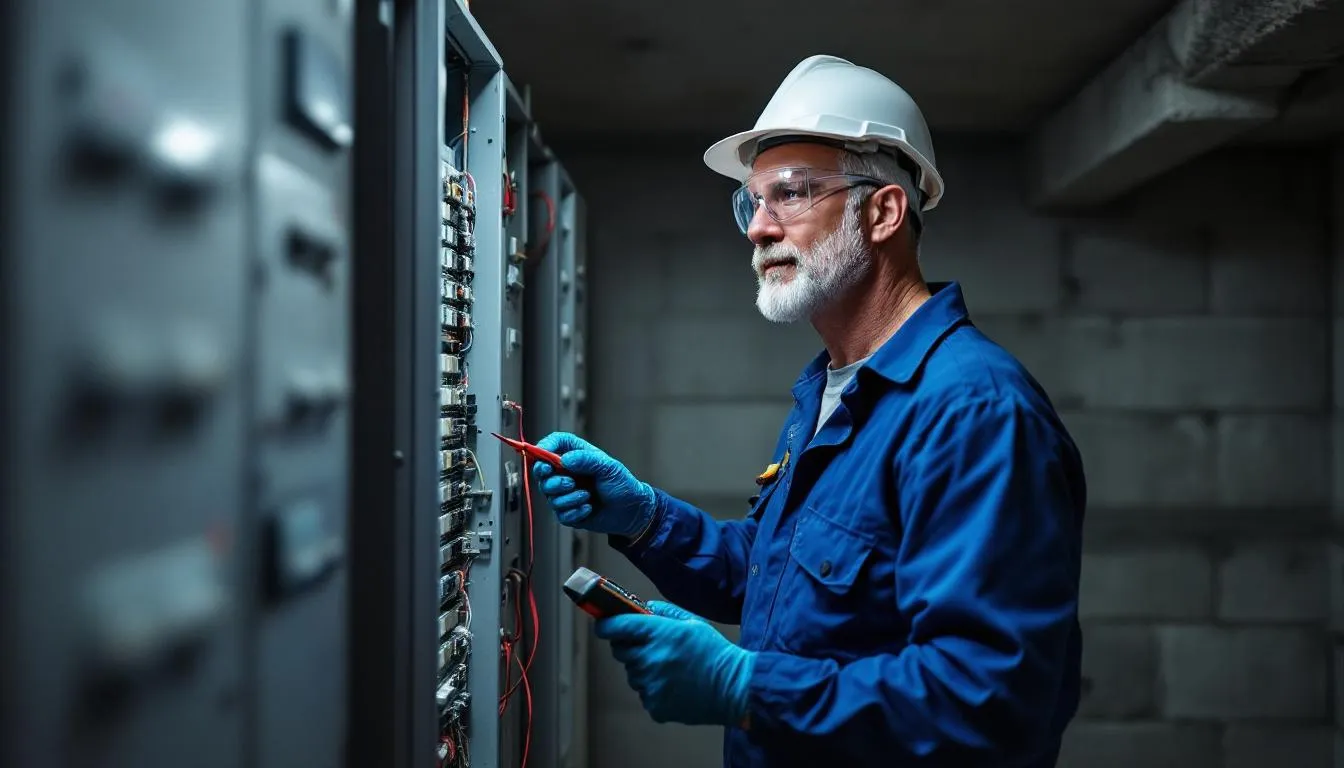
Tap density is another trap. Packing the first 40 feet of a plug-in run with every-window tap boxes can get too hot that section and leave the last half starving for capacity. Producers typically offer a per-window or per-10-foot maximum tap rule and a variety factor. Respect it, or phase-balance headaches and nuisance trips will follow.
Joint kits and housing rankings should have attention. Seismic design classifications in much of Orange County call for particular joint spacing and brace details. Request the tested anchorage illustrations up front and route around roofing system joist brace conflicts. If the bus permeates a fire-rated wall, use noted firestop systems around the sleeve and keep continuity of the real estate ground path.
Layout and installation details that pass inspection
Over racking, preserve the clear working space for any plug-in gadget, generally a 3-foot depth in front of the opening, and mind the reach for operation. Keep bus taps clear of sprinkler spray watching concerns. Coordinate with the fire designer early, since busway and sprinkler mains both desire the best path.
At mezzanines, check flooring filling where bus supports land. Sandwich bus is much heavier than it looks when you run a 100-foot period. Use drop cables or MC whips to reach devices, strain-relieved and with deliberate drip loops. Color code or label plug-in boxes with panel names and circuit numbers. Absolutely nothing speeds troubleshooting like an Orange County electrical repair call where the labels in fact match the single line.
Torque every joint to the producer's specification and log the worths. Infrared scan the follow a few weeks of complete load. I have actually discovered more than one a little cold joint that turned hot under peak. Catching it early pays.
A retrofit story that formed my playbook
A sorter retrofit in Santa Ana swapped a maze of 4-inch conduits for 500 feet of 800 A plug-in busway with 25 tap points. We staged the work over three weekends to secure weekday throughput. The surprises originated from headroom and harmonics.
First, headroom. The old channel runs hugged the roofing system, however the bus needed open access to its windows for the new tap boxes. We re-routed a 3-inch sprinkler main in two locations and included low-profile tap enclosures at five others to preserve forklift mast clearance. Precoordinating with the GC and sprinkler professional conserved us two weeks.
Second, harmonics. The VFD-heavy load hammered the neutral on a few 120/208 V panels fed from the bus taps. We shifted lighting controls and receptacles to a separate 277/480 V to 120/208 V transformer to isolate the worst wrongdoers and used K-rated transformers where density stayed high. The final IR scan showed even temperatures along the bus, and downtime throughout the next equipment move shrank from days to hours due to the fact that new taps took an afternoon.
Battery charging and EV infrastructure in warehouses
Forklift and pallet jack battery chargers create intense, localized loads. A 15-charger bank at 480 V can quickly draw 200 to 300 kW when whatever strikes at the same time. Connect that to worker EV chargers and you have both functional and HR pressure to keep outlets live at 5 pm. Busway lets you concentrate that demand on a dedicated feeder and after that meter it. Smart panels or networked breakers control charge windows and reduce the bite of SCE demand charges.
If you are preparing EV charger setup Orange County for fleet vans or staff member parking, involve civil early. Trenching throughout active docks is a scheduling headache. Outdoor-rated bus duct is possible for canopies, however the majority of sites choose switchgear and distribution boards feeding pedestals with direct-buried or duct bank conductors. Watch on fault current at pedestals. Some Level 3 DC fast chargers require greater disrupting capabilities than a normal branch panel can deliver.
Lighting, controls, and the impact on power quality
High-bay LED components cut with networked sensors cut energy usage and improve safety, however dense driver populations develop harmonic currents on shared neutrals if you feed them 120 V. Feeding lighting at 277 V lowers that tension and improves chauffeur effectiveness. Title 24 requires occupancy noticing and daylighting zones even in storage facility aisles. Coordinate control zones with circulation so maintenance doesn't require to eliminate a whole row of power to service a single light.
Lighting installation Orange County groups have found out to leave service loops and quick disconnects so component swaps take place from a lift without opening junction boxes. It is a little expense that saves hours throughout thousands of fixtures.
Maintenance that prevents the 2 am phone call
Busway is not upkeep complimentary. An easy regimen keeps it healthy: torque checks at one year and every three to 5 years after, IR scans annually during peak season, and visual inspection for dust buildup, loose wall mounts, or dented housings after any overhead work. Keep tap boxes closed and gaskets intact. In dusty areas, a quick vacuum pass during shutdowns pays off.
For panels and breakers fed by bus taps, workout breakers under load during arranged upkeep. An emergency electrician Orange County team gets fewer surprises when the equipment has been moved through its travel in a regulated setting. Train in-house staff on lockout points and plug-in box removal under de-energized conditions. It is quicker and safer than improvisation.
Common mistakes I still see
Underestimating ambient heat at the roofing system results in nuisance trips on hot days. Neglecting selective coordination makes a small fault a building-wide event. Packing a lot of taps too close together produces locations and voltage droops where they harm the most. Overlooking seismic bracing turns a last assessment into a punch list that postpones tenancy. And in older buildings, forgetting to verify the grounding path of tradition areas before tying in a brand-new bus run unlocks to stray existing and touch voltage.
Electrical fixing Orange County typically starts with the basics. Procedure at the source, not simply at the gadget. Validate the tap rating, breaker setting, and wire size between the bus and the load. More than as soon as, a mislabeled 60 A plug fed a 30 A device and no one saw till the motor cooked.
Budget and schedule trade-offs
On a pure product basis, busway can look pricey compared to copper conductors and avenue. When you include labor for long pulls, multiple parallel sets, and future relocations, the overall expense frequently favors bus. The tipping point normally falls around 400 to 600 A in long, obstructed runs with more than 3 anticipated modifications in the first two years.
Lead times shift. Equipment has been unpredictable the last couple of years, and busway is no exception. Order early and lock submittals with your producer to secure production slots. Field measurement for customized elbows and offsets can extend schedule if you do not build that enter your sequence.
Working with the best partner in Orange County
Warehouses are not a place to discover on the job. A commercial electrician Orange County who has hung busway in active aisles knows how to rig sections safely and keep lift traffic moving. A licensed electrician Orange County likewise knows which prepare check offices choose which documents and how to provide selective coordination studies that answer the customer's questions.
If you need exact same day electrical expert Orange County response during cutovers, personnel for it. Uptime matters, and a 24 hour electrician Orange County on call during a staged rollout reduces threat. For facilities with mixed-use spaces, a residential electrician Orange County might manage workplace fit-outs while the commercial crew focuses on mezzanine power, but keep the foreman lines clear to avoid cross-ups.
If you are looking for a local electrical expert Orange County for a very first appearance, ask for referrals from storage facility tasks, not simply occupant enhancements. Affordable electrical contractor Orange County does not have to imply light on experience. Best electrical contractor Orange County and top rated electrical contractor Orange County lists are a starting point, however walk a current project and talk to the maintenance group. They will tell you how the very first shutdown went and whether the as-builts matched reality.
Permitting, examination, and a smooth handoff
Bring the AHJ into the loop early if your style counts on large bus stumbles upon fire-rated separations or unusual anchorage methods. Provide the short-circuit and arc flash study with your submittal bundle. During rough examination, have ladders and lifts prepared so the inspector can see joints, bracing, and clearances securely. At last, labels and directory sites matter. Clear directories at panelboards, tap boxes labeled at both the gadget and the upstream schedule, and a one-line posted in the electrical space all speed approval.
Commissioning isn't simply for medical facilities. Load the battery chargers, run the conveyors, and watch your need. Capture baseline readings for voltage drop and temperature at the bus joints. Hand maintenance the torque logs and IR images. A tidy turnover reduces calls later.
When busway pairs well with conventional methods
Not everything belongs on the bus. Small office locations, isolated roof units, and one-off specialty machines might make more sense on channel and cable television, specifically where the runs are short and not likely to move. Utilize the bus for the foundation - primary to distribution to primary loads and charging zones - and let conventional methods manage the edges. This hybrid keeps material and labor in balance and respects the realities of as-built conditions.
Safety, training, and culture
Arc flash labeling on plug-in points is not optional. Train personnel on how to determine the equipment, read the label, and comprehend the PPE category. Keep insulated tools and a torque wrench package with the bus maker's sockets in the electrical room. Post a basic one-page treatment for de-energizing a bus area and removing a tap box. If your group can carry out those actions under calm conditions, they will do much better when the pressure is on.
I have seen facilities go 5 years without a single hot joint because the culture valued regular checks and documents. I have actually likewise seen new bus runs discolor at a joint within months since no one torqued to spec the very first time. The hardware is forgiving within limitations, however it rewards care.
Planning inputs that make the first conference count
- Peak and typical load profiles by area, consisting of battery charger banks and conveyors.
- Racking heights, sprinkler elevations, and any future mezzanine plans.
- Utility transformer size, secondary length, and readily available fault present data.
- Seismic style category, roof structure drawings, and anchorage preferences.
- Outage windows, production blackout dates, and safety training requirements.
Final ideas from the field
Warehouse power circulation is not about glossy equipment. It has to do with trusted, adaptable capacity that supports the method individuals move items through space. Busway, used wisely, fits Orange County's mix of seismic needs, strategy check rigor, and fast-moving logistics. Whether you are scoping an electrical panel upgrade Orange County, planning panel replacement Orange County in an older tilt-up, or laying out smart home circuitry Orange County for a workplace annex off the storage facility floor, align your style with operations. Keep the foundation strong, the taps neat, and the documents ahead of the inspector. Do that, and your facility will invest more time shipping and less time looking at a dark conveyor wondering what tripped.